Wavy Siding, Big Problems: Why We Steer Clear of Asbestos Shingles
![[HERO] Wavy Siding, Big Problems: Why We Steer Clear of Asbestos Shingles](https://cdn.marblism.com/A2ByWR6cRSB.webp)
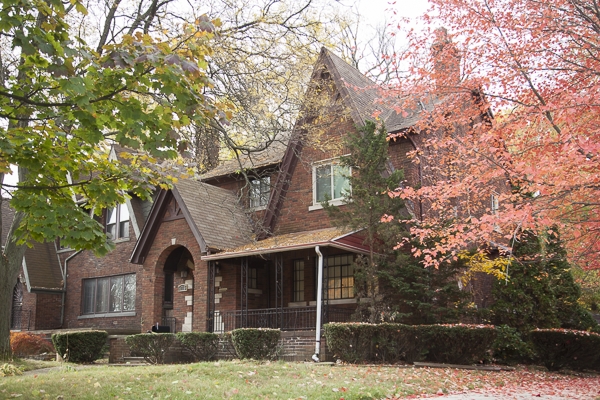
If you’ve spent more than five minutes driving through Detroit’s historic neighborhoods: from the stately streets of Boston-Edison to the cozy blocks of East English Village: you’ve seen it. It’s that distinctive, rigid, slightly "wavy" siding. Sometimes it’s a faded gray, but more often than not, it’s buried under fifteen coats of Sherwin-Williams’ finest, looking like a thick, petrified lasagna.
At Make Detroit Home, we love a good fixer-upper. We live for the "diamond in the rough" and the "good bones." But there is one thing that makes us pause, pull out the specialized checklist, and give our clients a serious "Helpful Homie" heart-to-heart: Asbestos Shingles.
Now, don't panic. If you’re currently living in a house with this siding, your home isn't going to explode. But if you’re looking at buying a house in Detroit or planning a detroit house renovation, you need to know why we steer clear of these wavy wonders and why you might want to, too.
Spotting the "Wavy" Warning: Identification 101
Before you can decide what to do with it, you have to know what you’re looking at. Asbestos-cement siding was the darling of the mid-20th-century construction world. It was fireproof, rot-proof, and bug-proof. Basically, it was the "indestructible" material of the 1920s through the 1970s.
Here is how you spot it in the wild:
- The Wave: Look at the bottom edge of the shingle. If it looks like a repeating ripple or a scalloped edge, that’s the classic "wavy" asbestos profile.
- The Texture: It’s not smooth like wood or flexible like vinyl. It feels like a thin piece of concrete. If you tap on it, it has a distinct "clink" rather than a "thud."
- The Fasteners: You’ll often see small, exposed nail heads at the bottom corners of each shingle.
- The Layers: In the world of Detroit real estate, we see a lot of "shingle sandwiches." This is where a previous owner slapped vinyl or aluminum siding directly over the old asbestos shingles. You might only see them if you peek behind a loose corner or look in the garage.

The "It’s Fine Until It’s Not" Factor
Here is the thing about asbestos siding: it’s actually not that dangerous when it’s just hanging out on your house. Experts call this "non-friable." This is a fancy way of saying the dangerous asbestos fibers are locked inside a cement tomb. As long as they stay in that tomb, they aren't floating into your lungs.
But here is the catch: and it’s a big one.
The second that siding is disturbed, broken, sanded, or cut, it becomes "friable." That’s when the fibers are released into the air, and that’s when the hazardous material situation begins.
If you’re buying a house that is "turnkey" and the siding is in perfect shape, you might be fine for a decade. But let’s be real: most people getting into the Detroit market are looking to make updates. Whether you want to install a new HVAC vent, put in a modern window, or just hang a Ring doorbell, you are going to have to disturb that material.
The moment you hear that crack, the project goes from a simple Saturday DIY to an environmental remediation event. We don't like those kinds of surprises, and we don't want them for our clients.
The Maintenance Nightmare: The Saltine Cracker Effect
One of the biggest reasons we steer clear is that asbestos siding is incredibly brittle. Imagine a giant, house-sized Saltine cracker that has been sitting out since the 1950s. That’s essentially what you’re dealing with.
Because these shingles are so old, they have lost any flexibility they might have once had. If a kid throws a baseball against the house? Crack. If you lean a ladder against it a little too hard while cleaning the gutters? Shatter.

The problem is that you can’t just go to Home Depot and buy a replacement shingle. They don’t make them anymore (for obvious "deadly lung disease" reasons). While there are some modern fiber-cement replacements designed to mimic the look, they rarely match the thickness or the exact wave pattern of the original 1940s stuff. You end up with a house that looks like it has a bad dental implant: one shingle that just doesn't quite fit the rest of the smile.
Why Renovation Becomes a Budget Black Hole
When we talk about detroit house renovation, we focus on ROI (Return on Investment). We want you to put money into things that make your life better and your home more valuable: like a killer kitchen or a restored porch.
Asbestos siding is the opposite of a good investment. It’s a "hidden cost" magnet.
1. Specialized Disposal Fees
You cannot: we repeat, CANNOT: just toss asbestos shingles into a standard dumpster. If a dumpster company finds asbestos in their load, they can (and will) charge you thousands of dollars in "contamination fees." You have to use specialized dumpsters and dispose of the material at specific hazardous waste sites. This easily triples your waste removal costs.
2. The Contractor Premium
Not every contractor is willing to work on a house with asbestos siding. Those who are will often charge a "hazard premium." They have to use "wet methods" (keeping the siding soaked so dust doesn't fly), wear PPE, and take extra precautions to ensure they don't contaminate the soil around your house.
3. The "Surprise" Factor
Often, when you start removing asbestos siding, you find that the wood underneath has been "sweating" for sixty years. Because the cement shingles don't breathe well, moisture can get trapped, leading to rot in the original wood sheathing. Now, you aren't just paying for siding removal; you're paying for structural repairs.

Why We Steer Clear (And Why You Should Too)
As experts in Detroit real estate, our goal is to help our clients build wealth. We want you to buy a home that grows in value and doesn't become a liability.
When we see a house covered in wavy siding, we see a potential $15,000 to $30,000 bill standing between the buyer and a modern, safe, energy-efficient exterior. If you have to spend $20k just to get rid of the old siding before you even start putting on the new stuff, you are starting your homeownership journey in a hole.
We prefer to guide our clients toward homes that have original wood siding (which can be restored) or even modern vinyl (which is easy to replace). We want your "fixer-upper" energy to go into the fun stuff, not into paying for a guy in a hazmat suit to haul away your exterior walls.
What If You Already Own It?
If you already have wavy siding, don't lose sleep. Here is the Helpful Homie advice for current owners:
- Encapsulation is your friend. If the siding is in good shape, keep it painted. A good layer of paint helps seal the surface and keeps the material from becoming brittle and dusty.
- Don't power wash it. High-pressure water can break the shingles or strip away the surface, releasing fibers. Use a garden hose and a soft brush if you need to clean it.
- Check your insurance. Some insurance companies are getting picky about asbestos. Make sure you're covered and that they won't drop you if they find out you have it.
- Test before you toss. If you're planning a renovation, get a professional test done. It usually costs about $100-$200 and will give you the legal documentation you need to plan your next steps.

Final Thoughts
Detroit is a city of incredible architecture and history, and sometimes that history includes materials we’d rather forget. Asbestos siding is one of those "relics" that looks charming in a vintage photo but is a headache in real life.
Whether you are buying a house in Detroit for the first time or you're a seasoned pro in the detroit house renovation world, remember: the "wave" isn't a friendly greeting. It's a sign to slow down, check your budget, and maybe look for a house with a little less... "lasagna" on the walls.
Want to find a Detroit home that won't break your heart (or your bank account)? Give us a shout at Make Detroit Home. We’ll help you navigate the shingles, the suburbs, and everything in between.

Categories
- All Blogs (48)
- Community (18)
- Construction (4)
- Detroit (37)
- Don't do this! (3)
- Downpayment Assistance (7)
- Financing (8)
- First Time Home Buyer (17)
- Fun Fact (22)
- History (12)
- Home Maintenance (12)
- Idea's! (7)
- Money (3)
- Moving (11)
- Nerd (11)
- Pontiac (4)
- Real Estate (7)
- Renovations (3)
- Selling (3)
- Taxes (1)
- Title (1)
- Upgrades (3)
- You Should Know (14)
Recent Posts