The Truth About Buying in Detroit: What You Actually Deserve to Know
![[HERO] The Truth About Buying in Detroit: What You Actually Deserve to Know](https://cdn.marblism.com/GOZchasjJmc.webp)
Look, we’ve all seen the clickbait headlines. "Buy a House in Detroit for the Price of a Used Honda!" or "The Most Affordable City in America!" While Detroit is definitely more affordable than, say, Austin or Brooklyn, there is a massive difference between "cheap" and "accessible."
As a buyer, you deserve more than a sales pitch. You deserve the No-BS truth. At Make Detroit Home, we aren't here to just sell you a building; we want you to actually live here and love it. That means understanding the quirks, the headaches, and the hidden wins that come with the detroit housing market.
If you’re thinking about buying a house in detroit, grab a coffee, sit down, and let’s talk about what the Zillow listings don't tell you.
1. Don’t Fall for the "Instagram Trap"
We’ve all seen them: the beautifully staged houses with the trendy pink front doors, brass hardware, and perfectly neutral LVP flooring. They look amazing in photos. But in Detroit, looks can be incredibly deceiving.
The "Instagram Trap" is when a flipper spends $10k on cosmetic upgrades (paint, tile, lighting) but ignores the $40k worth of "guts" the house actually needs. When you’re looking at detroit real estate, you have to prioritize functionality over aesthetics.
A house can have the most beautiful kitchen in the world, but if the main sewer line is collapsed or the 1920s knob-and-tube wiring is still active behind those freshly painted walls, you’re in for a world of hurt. You deserve a house that works. Before you fall in love with a backsplash, look at the furnace. Check the age of the roof. Smell the basement (if it smells like a swamp, run).

2. The Real Deal with Property Taxes (NEZ is Your Best Friend)
Detroit property taxes are a common point of confusion for every first time homebuyer detroit has ever seen. Here’s the reality: Detroit has some of the highest property tax rates in the country. However, there are ways to make it manageable, if you know what you’re doing.
First, you need to understand the NEZ (Neighborhood Enterprise Zone). This is a tax abatement program designed to encourage people to buy and renovate in specific areas. If a house has an NEZ-Homestead certificate, your property taxes can be significantly lower for up to 15 years.
But here’s the kicker: Taxes in Michigan "uncap" when a property is sold. This means the previous owner might have been paying $1,200 a year because they lived there for 30 years, but once you buy it, the city re-evaluates the value, and your bill could jump to $4,000.
Always ask your agent to help you calculate the projected taxes, not just what the current owner is paying. You deserve to know your actual monthly payment before you sign on the dotted line.
3. The Neighborhood Vibe Matters as Much as the House
In many cities, you buy a house based on the school district or the commute. In Detroit, it’s all about the block.
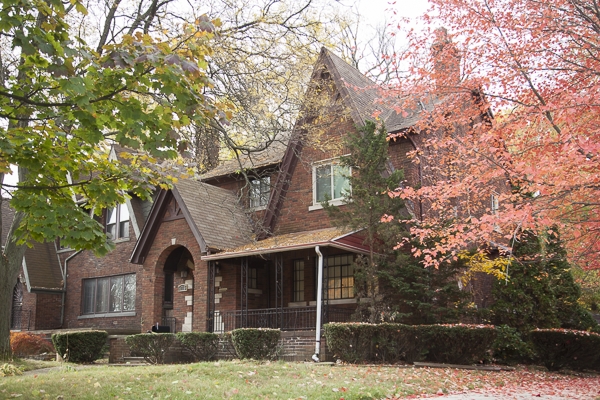
Detroit is a city of neighborhoods, and each one has a completely different soul. You might find a gorgeous mansion in Boston-Edison, a funky artist vibe in Woodbridge, or a tight-knit, community-garden-focused feel in Core City.
When you’re looking at a detroit neighborhoods guide, don't just look at the crime stats or the proximity to a hipster coffee shop. Go there at 10 PM on a Tuesday. Go there on a Saturday afternoon. Talk to the neighbors. Are they sitting on their porches? Do they know each other? In Detroit, your neighbors are your security system, your social circle, and your support network. Buying a house here is about joining a community, not just occupying a structure.
4. The Insider Secret: Detroit City Income Tax
Here’s one a lot of buyers don’t realize until after closing: Detroit has a city income tax, and for residents it’s 3%. If you live in Detroit, that tax affects your paycheck, and it needs to be part of your real monthly budget just like your mortgage, insurance, and utilities.
For residents, that 3% city income tax is separate from federal and Michigan state income taxes. So even if the house payment looks good on paper, your take-home pay may be lower than you expected once that local tax is factored in. If you work in the city but don’t live here, there’s also a nonresident city income tax rate, which is another reason buyers moving across city lines should pay attention.
This isn’t a reason not to buy in Detroit. It’s just one of those insider details that can throw off your numbers if nobody warns you. Before you buy, run your real monthly budget based on your actual paycheck after Detroit city withholding. It’s a small step, but it can save you from that awful “wait, where did my money go?” feeling later.
5. The Water Bill Trap
This is one of those painfully unsexy Detroit details that can absolutely bite you after closing: water bills can stick with the house. So if a seller has an outstanding balance or there’s a billing issue that never got cleaned up, you do not want to discover it after you already have the keys.
Before closing, make sure final water readings are verified and that everyone is clear on who is responsible for what. This is not the time to assume the title company, the seller, or the city will magically sort it out without anyone double-checking. Ask the question directly and get the answer in writing.
No-BS version: if you skip this step, you can end up inheriting a surprise bill tied to a property you just bought. And that is a terrible way to start homeownership.
6. The Homestead Paperwork Nobody Should Forget
Here’s another insider thing that sounds boring but matters a lot: file your Principal Residence Exemption (PRE) paperwork if the home is going to be your primary residence. If you don’t, you can get hit with an extra 18 mills on your property tax bill.
That’s not a tiny clerical issue. That’s real money. A lot of first-time buyers are so focused on closing day, moving trucks, and paint colors that they miss the paperwork part and then wonder why their tax bill feels way higher than expected.
If the house is your main home, make sure the PRE gets filed correctly and on time. Don’t assume it happened automatically just because you bought the place. In Detroit, little paperwork mistakes can turn into expensive mistakes fast.
7. The Reality of Detroit Renovations
Let’s talk about the "$500 house." Yes, they exist (though they’re usually $1,000+ now via the Land Bank). But as the research shows, a "cheap" house is often the most expensive house you’ll ever buy.
A home that has been sitting vacant for a decade doesn't just need a "refresh." It needs everything. We’re talking:
- New plumbing (because the copper was likely scrapped years ago).
- New electrical systems.
- New windows.
- Foundation stabilization.
- Lead and asbestos abatement.
A $15,000 shell can easily require $100,000 to $150,000 in work to make it livable. And unless you have that cash sitting in a bank account, it’s hard to finance. Most traditional banks won't give you a mortgage for a house that doesn't have a working kitchen or bathroom.

If you aren't ready for a two-year relationship with a contractor and a mountain of permits, look for something that is already "Certificate of Occupancy" (C of O) ready. You deserve to know that "sweat equity" in Detroit often involves actual blood, sweat, and a lot of tears.
8. Financing Challenges and the Appraisal Gap
This is the part that frustrates buyers the most. You find a house you love for $150,000. You’re qualified for the loan. But the bank’s appraiser says the house is only worth $130,000 because the "comparable" sales in the area are all over the place.
This is called the appraisal gap, and it’s a major hurdle in the Detroit market. Because our housing stock is so varied: with a fully renovated house sitting next to a vacant lot or a fixer-upper: it’s hard for banks to justify high prices.
To win in this market, you need to be prepared for this. Sometimes it means having extra cash to cover the gap, or finding a lender who specializes in Detroit-specific programs. There are amazing grants out there, like the $25,000 down payment assistance program for Detroit residents, which can be a total game-changer.
9. Building Generational Wealth, Not Just Buying a Building
Why do we do it? Why deal with the taxes, the old pipes, and the appraisal headaches? Because Detroit is one of the few places left where you can actually build generational wealth.
When you buy a home in a stabilizing Detroit neighborhood, you aren't just paying a mortgage; you’re investing in a piece of history. Many of these homes were built with materials you literally cannot buy anymore: old-growth wood, solid masonry, and craftsmanship that has stood for a century.
By staying in the city, taking advantage of the low price-to-rent ratio, and pouring love into these properties, you’re creating an asset that will actually mean something for your family's future. You aren't just a "homeowner": you’re a stakeholder in the city’s comeback.

Final Thoughts for the Detroit Buyer
Buying a house here is an adventure. It’s messy, it’s complicated, and it’s occasionally infuriating. But it’s also incredibly rewarding.
You deserve an agent who will tell you "No" when a house is a money pit. You deserve to know that the "No-BS" approach is the only way to navigate this city. Detroit isn't for everyone, but for those who get it, there’s nowhere else they’d rather be.
If you’re ready to stop scrolling Zillow and start getting real about your future in the city, we’re here to help. Let’s find you a house that has the right bones, the right vibe, and a tax bill that won't make you cry.
Welcome to Detroit. Let's get to work.
Categories
- All Blogs (48)
- Community (18)
- Construction (4)
- Detroit (37)
- Don't do this! (3)
- Downpayment Assistance (7)
- Financing (8)
- First Time Home Buyer (17)
- Fun Fact (22)
- History (12)
- Home Maintenance (12)
- Idea's! (7)
- Money (3)
- Moving (11)
- Nerd (11)
- Pontiac (4)
- Real Estate (7)
- Renovations (3)
- Selling (3)
- Taxes (1)
- Title (1)
- Upgrades (3)
- You Should Know (14)
Recent Posts