The Wall That Shouldn't Have Been: Detroit's Birwood Wall and the Legacy of Redlining
![[HERO] The Wall That Shouldn't Have Been: Detroit's Birwood Wall and the Legacy of Redlining](https://cdn.marblism.com/DoqVsL-zXZ9.webp)
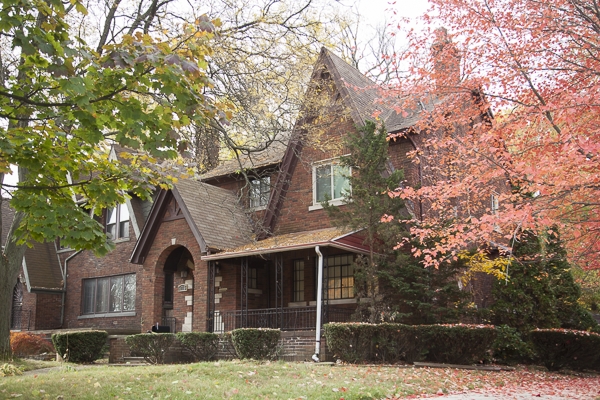
If you’re spent any time looking at a Detroit neighborhoods guide or driving through the Northwest side, you’ve probably noticed that our city has some of the most incredible architecture in the country. We have Tudor Revivals that look like they belong in a storybook and mid-century modern gems that’ll make your jaw drop. But Detroit also has some architectural features that aren't there for beauty. They were built for a much darker purpose.
One of those is the Birwood Wall, also known as the "Eight Mile Wall" or "Detroit’s Berlin Wall."
If you’re moving to Detroit or thinking about buying a house in Detroit, you have to understand the history of the ground you’re standing on. You can’t talk about Detroit real estate without talking about redlining, and you can’t talk about redlining without talking about this concrete slab in Northwest Detroit.
Here is the no-BS history of the wall that shouldn't have been.
The Year was 1941: A Developer’s "Problem"
Imagine it’s 1941. A developer named James T. McMillan wants to build a new subdivision for white families near 8 Mile and Wyoming. At the time, this was the edge of the city, a place where people were looking for the "suburban" feel while staying within city limits.
McMillan had a plan, he had the land, and he had the blueprints. What he didn't have was the money.
To get the project off the ground, he needed construction loans insured by the Federal Housing Administration (FHA). But when the FHA inspectors showed up, they saw a "problem." To the west of the proposed subdivision was an existing neighborhood where Black families lived. Most of these families had built their own homes on the outskirts of the city to escape the crowded, substandard housing they were forced into closer to downtown.
The FHA looked at those Black families and told McMillan, "No."
They deemed the area a "high risk" for investment purely because of the racial makeup of the neighboring community. In their eyes, the presence of Black homeowners would "devalue" the new white subdivision.

The Solution: A Six-Foot Concrete Barrier
McMillan didn't walk away from the deal. Instead, he came up with a solution that sounds like something out of a dystopian novel. He proposed building a wall.
He told the FHA that if he built a physical barrier between the two neighborhoods, it would "protect" the white subdivision from the "hazardous" influence of the Black neighborhood.
The FHA agreed.
In 1941, McMillan built a concrete and cinder block wall that was six feet high, about a foot thick, and stretched for nearly half a mile (2,200 feet) from 8 Mile Road south to Pembroke Avenue.
Once the wall was up, the FHA handed over the money. The white subdivision was built, the houses were sold, and a physical monument to segregation was cemented into the Detroit landscape.
This Wasn't Just One Developer: The Reality of Redlining
It’s easy to point the finger at one guy named McMillan, but the Birwood Wall was a symptom of a much larger, government-sanctioned system called redlining.
If you’re looking at Historic Homes in Detroit, you’ll often find that the neighborhoods were shaped by the Home Owners' Loan Corporation (HOLC) maps from the 1930s. These maps color-coded neighborhoods based on "residential safety."
- Green: "Best" (White, wealthy, new).
- Blue: "Still Desirable."
- Yellow: "Definitely Declining."
- Red: "Hazardous" (Black, immigrant, or "inharmonious" populations).
The FHA’s official Underwriting Manual at the time literally suggested that "natural or artificial barriers" (like highways or, you know, giant concrete walls) should be used to separate different racial groups to keep property values high.
The Birwood Wall wasn't a "glitch" in the system; it was the system working exactly as it was designed. It was a physical manifestation of a policy that prevented Black Americans from building generational wealth through homeownership for decades.

Life on Either Side of the Wall
For the people living there, the wall wasn't just a policy: it was a daily reality.
On the white side (the Mendota side), kids played in manicured backyards, and the wall was just a boundary. On the Black side (the Birwood side), the wall was a constant reminder that the government viewed their presence as a threat to value.
But here’s the thing about Detroiters: we are resilient.
The neighborhood on the Birwood side didn't just wither away. It remained a tight-knit community of homeowners who took pride in their properties despite the fact that the government refused to invest in them. They built their own community, supported each other, and raised families in the shadow of a wall designed to exclude them.
Eventually, the "purpose" of the wall failed. By the 1950s and 60s, the neighborhoods began to integrate as Black families successfully moved into the houses on the Mendota side. The physical wall remained, but the racial barrier it was meant to enforce started to crumble.
From a Symbol of Hate to a Canvas of Hope
For a long time, the Birwood Wall just sat there: an ugly, grey reminder of a shameful past. But in 2006, the community decided to change the narrative.
Neighborhood residents and local artists, led by Chazz Miller, transformed the wall into a massive mural. Instead of a blank concrete slab of segregation, it became a vibrant history book. The mural depicts scenes of Black life, the struggle for civil rights, and portraits of people who lived in the neighborhood.
In 2021, the wall was officially added to the National Register of Historic Places. It’s now part of the Alfonso Wells Memorial Park.
When you visit today, it’s a strange feeling. It’s a park where kids play and families gather, but the wall is still there. You can touch the concrete. You can see how close it sits to the backyards of the homes. It’s a place of reflection: a reminder of how far we’ve come and how much work we still have to do in the world of Detroit real estate.

Why We Talk About This at Make Detroit Home
You might wonder why a real estate agency is talking about a segregation wall from 1941.
It’s because you can’t truly "make Detroit home" if you don’t respect the history of the city. When we help people with buying a house in Detroit, we aren't just selling four walls and a roof. We are helping people join a community with a complex, painful, and beautiful story.
The legacy of the Birwood Wall still impacts the city today. It explains why some neighborhoods have seen massive investment while others were starved of capital for seventy years. Understanding redlining helps you understand why "comparable sales" look the way they do and why some areas have different infrastructure than others.

Moving Forward: Resilience and Reinvestment
The Birwood Wall is a lesson in resilience. It shows that even when a system is literally built of concrete to hold people back, the spirit of the community is stronger.
Today, Northwest Detroit is home to some of the most active block clubs and dedicated neighbors you’ll ever meet. People are buying these Historic Homes in Detroit, restoring them, and building new legacies.
If you want to see the wall for yourself, it’s located in the Alfonso Wells Memorial Park (near Birwood Ave and 8 Mile). It’s a must-see for anyone who wants to understand the "real" Detroit.
At Make Detroit Home, we believe in transparency. We love this city: the good, the bad, and the complicated. Knowing the history of the Birwood Wall doesn't make us love the city less; it makes us appreciate the people who stayed, fought, and turned a wall into a work of art even more.
If you’re looking to find your place in this city’s story, reach out. We’ll give you the no-BS guide to finding a home here.

Categories
- All Blogs (49)
- Community (19)
- Construction (4)
- Detroit (38)
- Don't do this! (3)
- Downpayment Assistance (7)
- Financing (8)
- First Time Home Buyer (17)
- Fun Fact (22)
- History (12)
- Home Maintenance (12)
- Idea's! (8)
- Money (3)
- Moving (11)
- Nerd (11)
- Pontiac (4)
- Real Estate (8)
- Renovations (4)
- Selling (3)
- Taxes (1)
- Title (1)
- Upgrades (4)
- You Should Know (15)
Recent Posts