The Condo Trap: Why We Steer First-Time Buyers Toward Houses Instead
![[HERO] The Condo Trap: Why We Steer First-Time Buyers Toward Houses Instead](https://cdn.marblism.com/Z25o4s9ni8q.webp)
Listen, I get it. You’re a first time homebuyer in Detroit, and you’re scrolling through Zillow at 11:00 PM. You see a loft in a converted 1920s factory or a sleek unit in Midtown with "exposed brick" and "industrial vibes." It looks effortless. No grass to mow, a gym in the basement, and you’re walking distance to your favorite brewery.
It feels like the "adult" thing to do. It feels like a safe starter move.
But as a detroit real estate agent who has seen the behind-the-scenes chaos of building management, I’m here to give you the "No-BS" talk. At Make Detroit Home, we often steer our first-time buyers, especially those on a tight budget, away from the condo dream and toward a traditional single-family house.
Why? Because for most people starting out, a condo isn't a shortcut to homeownership; it’s a financial trap disguised as a convenience. Let’s break down why "the condo life" is often a raw deal in the D.
1. The HOA Fee: The Budget Killer That Never Sleeps
When you’re buying a house in detroit, you calculate your mortgage, taxes, and insurance. That’s your PITI. It’s a relatively stable number.
When you buy a condo, you add a fourth, very hungry horseman to that equation: The Homeowners Association (HOA) fee.
In Detroit, these fees aren’t just a "small monthly contribution." Because so many of our coolest buildings are historic, they are incredibly expensive to maintain. It’s not uncommon to see HOA fees ranging from $400 to $900 a month. Think about that. That is essentially a second car payment or a massive chunk of a mortgage payment that goes... where exactly?

The problem isn't just the current cost; it’s the lack of control. A condo board can vote to raise those fees at any time. If the building’s heating system fails or the "luxury" lobby needs a facelift to keep up with the new development down the street, your monthly "rent-to-yourself" just went up $150. For a first-time buyer on a fixed budget, that’s the difference between living comfortably and eating instant noodles until 2030.
2. Special Assessments: The $20,000 Surprise
If you think a monthly fee is bad, wait until you meet the "Special Assessment." This is the stuff of real estate nightmares.
A special assessment happens when the condo association realizes they don’t have enough money in their "reserve fund" to cover a major emergency. In Detroit, we have a lot of tall, beautiful, old buildings. Those buildings eventually need:
- A new roof (which, on a high-rise, costs hundreds of thousands).
- Elevator modernization (vintage elevators are cool until they cost $100k to fix).
- Façade repairs (brick and limestone don’t stay pretty forever).
When the bill comes due, the board doesn't just say "oh well." They send every unit owner a bill. I have seen first-time buyers get hit with a $15,000 or $25,000 "special assessment" bill that is due within months.
If you bought a house and the roof leaked, you could patch it, shop around for quotes, or get a HELOC. In a condo? You pay what the board tells you to pay, when they tell you to pay it. If you’re on a tight budget, a surprise five-figure bill is a one-way ticket to financial ruin.
3. The Illusion of "Maintenance-Free" Living
People buy condos because they "don't want to deal with maintenance." But here is the secret: you’re still paying for the maintenance; you’re just paying someone else to manage it poorly.

When you own a house, if your basement has a crack or your foundation is shifting, you call three contractors, you get the best price, and you watch them do the work. You are the CEO of your property.
In a condo, you are a passenger. If there is a major structural issue in the building, like a foundation leak that’s making your unit damp, you have to fight the board to fix it. You have to wait for meetings, wait for votes, and wait for them to hire their brother-in-law’s construction company. We’ve seen owners spend years trying to get a condo association to address water intrusion or window seals. You have all the liability of a homeowner with none of the authority.
4. The "Neighbors from Hell" (Board Edition)
When you buy a house, your neighbors are the people next door. When you buy a condo, your neighbors are your landlords.
Condo boards are often made up of volunteers who may or may not know anything about building management. Sometimes they are great. Other times? They are power-tripping retirees or busybodies who want to dictate what color your curtains are or whether you can have a specific breed of dog.
For a first time homebuyer in Detroit, you’re usually looking for freedom. You want to paint a wall, host a BBQ, or maybe work on a project in your garage. In a condo, every "freedom" is subject to a 50-page handbook of rules. Want to rent out your unit in three years when you move? Oops, the board just passed a "no-rental" cap. Now you’re stuck with an asset you can’t monetize.
5. Why the Detroit House Wins Every Time
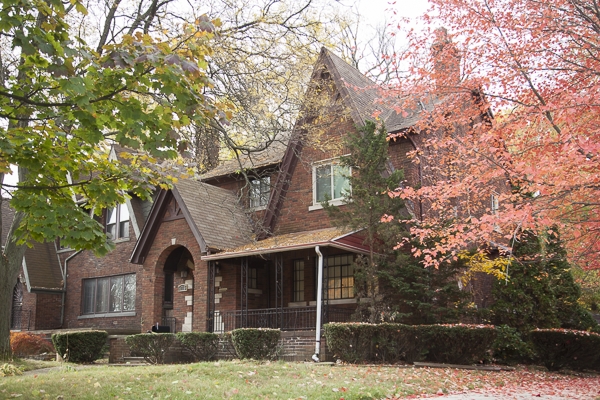
This is why we push for houses. In Detroit, you can still find incredible homes in neighborhoods like Bagely, Morningside, or Grandmont Rosedale that offer something a condo never will: Autonomy.

Appreciation and Equity
When you pay a $500 HOA fee, that money is gone. It’s an expense. When you take that same $500 and put it into a new kitchen or a landscaped backyard in a single-family home, you are building equity. You are increasing the value of your land and your structure. In the Detroit market, houses in transitioning neighborhoods historically see better appreciation than generic condo units.
Space to Grow
Most first-time buyers don't stay in their first home forever. A house gives you a yard for a dog, a garage for a workshop (or an e-bike collection), and a basement for storage. A condo is a box. If your life gets bigger, you have to move. If your life gets bigger in a house, you finish the attic.
The Math of Reality
Let’s look at the numbers.
- Condo: $175,000 price tag + $500/month HOA + 1% chance of a $20k assessment.
- House: $225,000 price tag + $0 HOA + $200/month "Maintenance Savings Account" that you control.
The house might look more expensive on paper, but the monthly carry and the long-term risk are almost always lower.
When IS a Condo a Good Idea?
I’m not a hater. Condos make sense for some people. If you are a high-net-worth individual who travels 6 months a year and just wants a "lock and leave" lifestyle, go for it. If you have a massive emergency fund and the HOA fee is "pocket change" to you, the convenience is worth it.
But if you are a first time homebuyer in Detroit trying to build wealth? If you’re working hard for every dollar and trying to escape the cycle of paying for things you don't own? The condo is a trap.

Final Thoughts from Your Favorite Detroit Real Estate Agent
At Make Detroit Home, we want you to love your house five years from now, not just on closing day. We don't want to get a frantic call from you in 2028 because your condo board just slapped a lien on your property for an elevator repair you can't afford.
Buying a house in Detroit is about taking a stake in a neighborhood. It’s about having a porch to sit on, a patch of dirt to plant some Detroit-hardy perennials, and the peace of mind that no one can tell you what to do with your front door.
Ready to find a house that actually builds your future instead of draining your bank account? Let’s skip the "condo trap" and go find you a real piece of Detroit.
Give us a shout. We’ll show you the houses that make sense.
Categories
- All Blogs (48)
- Community (18)
- Construction (4)
- Detroit (37)
- Don't do this! (3)
- Downpayment Assistance (7)
- Financing (8)
- First Time Home Buyer (17)
- Fun Fact (22)
- History (12)
- Home Maintenance (12)
- Idea's! (7)
- Money (3)
- Moving (11)
- Nerd (11)
- Pontiac (4)
- Real Estate (7)
- Renovations (3)
- Selling (3)
- Taxes (1)
- Title (1)
- Upgrades (3)
- You Should Know (14)
Recent Posts