Don’t Kill Your Bricks: Why Lime Mortar is Non-Negotiable for Historic Detroit Homes
![[HERO] Don’t Kill Your Bricks: Why Lime Mortar is Non-Negotiable for Historic Detroit Homes](https://cdn.marblism.com/blyI6sTp4nd.webp)
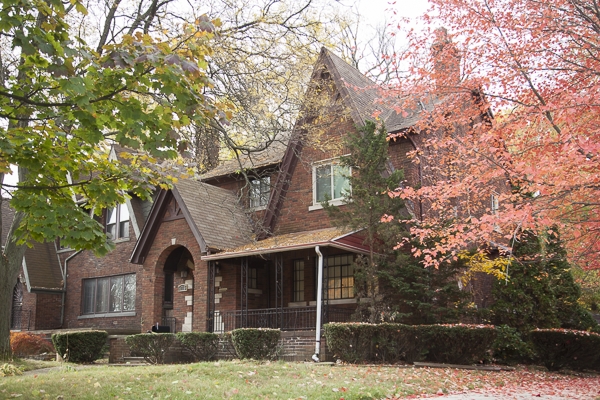
If you’ve spent more than five minutes driving through Boston Edison, Indian Village, or Palmer Woods, you know exactly why we’re obsessed with Detroit. It’s the brickwork. It’s that deep, earthy red, the intricate patterns, and the sheer "they don't build 'em like this anymore" energy of our historic neighborhoods.
But as a detroit real estate agent, I see a lot of "renovated" houses that are actually ticking time bombs. And the culprit isn’t some hidden mold or a crumbling foundation, it’s the stuff holding the bricks together.
We’re talking about mortar. Specifically, the tragedy of putting modern concrete mortar on a 100-year-old Detroit home. If you own one of these beauties, or you're looking to start a detroit house renovation, pull up a chair. We need to talk about why lime mortar is the only way to go, and why using modern cement is basically like giving your house a death sentence by a thousand cracks.
The Secret Life of a 1920s Brick
To understand why modern materials kill old houses, you have to understand the bricks themselves. The bricks used in Historic Homes in Detroit during the late 1800s and early 1900s are not the same as the bricks you’d buy at a big-box hardware store today.
Back in the day, bricks were fired at lower temperatures. This made them "soft." They are porous, they are slightly flexible, and, most importantly, they breathe. They absorb moisture from the Detroit humidity and the winter slush, and then they slowly let it evaporate back out.
Because the bricks are soft, the mortar between them needs to be even softer. Historically, that meant lime mortar. Lime mortar is the "sacrificial" part of the wall. It’s designed to be the weakest link. If the house settles or the temperature changes, the lime mortar gives a little. If moisture gets trapped, the lime mortar lets it escape.

The "Tight Cast" Nightmare: Why Concrete is the Enemy
Enter modern Portland cement. This is the gray, rock-hard stuff you see in new construction. It’s great for a 2024 suburban build, but it is absolute poison for a 1915 Tudor.
Here is the analogy I always tell my clients: Using modern concrete mortar on a historic brick home is like wearing a plaster cast that’s three sizes too small.
When your arm is in a cast, it can’t move. If your arm swells, the cast doesn’t care, it just squeezes until things start to hurt. Modern cement is that cast. It is significantly harder and denser than the historic bricks it’s surrounding. When the Detroit weather does what it does, swinging from a humid 90 degrees in July to a freezing 10 degrees in January, the bricks want to expand and contract.
But the concrete mortar won't let them. It sits there, stiff and unyielding. Since the mortar won’t give, the pressure has to go somewhere. That "somewhere" is directly into your beautiful, historic bricks. Instead of the mortar cracking (which is easy and cheap to fix), the bricks start to crack. This leads to a nightmare called "spalling."
What is Spalling (and Why Should You Care)?
You’ve probably seen it. You’re walking the dog through the neighborhood and you see a house where the faces of the bricks are literally popping off, leaving a crumbly, orange mess behind. That’s spalling.
When you use modern cement, you aren't just creating a "tight cast" pressure issue; you’re also trapping water. Because concrete isn't porous, the moisture that gets into the wall has nowhere to go. It gets stuck behind that hard concrete shell. When the first big Detroit freeze hits, that trapped water turns to ice, expands, and blows the face right off your brick.
Once the hard outer "skin" of the brick is gone, the soft interior is exposed to the elements. From there, your wall starts to disintegrate. Repairing a few mortar joints is a weekend project; replacing a thousand spalled bricks is a financial catastrophe.

The Contractor Red Flag: "It’s All the Same Stuff"
If you are interviewing contractors for a detroit house renovation and you ask about lime mortar, pay very close attention to their reaction.
If they say, "Oh, we just use Type S masonry cement, it’s stronger and lasts longer," do not hire them. In fact, politely show them the door and maybe hide your vintage doorknobs on their way out.
Many general contractors are used to modern builds. They think "stronger is better." In the world of historic preservation, "stronger" is actually "destructive." A real pro who understands Historic Homes in Detroit will know that they need to match the "compressive strength" of the original mortar. They will talk about lime-to-sand ratios. They will talk about "breathability."
If a contractor tries to tell you that "mortar is just mortar," they are telling you they don't understand the chemistry of your home. It’s one of the biggest red flags in the Detroit real estate world.

Why Does This Matter for Your Home Value?
As a detroit real estate agent, I can tell you that savvy buyers are getting smarter. When we walk through a house in Indian Village or University District, we aren't just looking at the kitchen backsplash. We’re looking at the "tuckpointing" (the repair of the mortar joints).
If I see shiny, dark-gray, smeary concrete mortar slapped onto a historic chimney, I know there’s a high chance of structural issues down the road. It tells a buyer that the previous owner didn't know how to maintain the property correctly, which makes them wonder what else was "repaired" incorrectly. Proper lime mortar restoration isn't just about aesthetics, it’s about protecting your investment and ensuring that house stands for another hundred years.
The Good News: It Looks Better Anyway
Beyond the science and the structural integrity, there’s the "vibe" factor. Modern cement looks... well, modern. It’s cold and gray.
Authentic lime mortar has a beautiful, sandy texture and a warmer tone that actually matches the historic aesthetic. When it’s done right, the mortar joints look soft and integrated, not like someone drew on your house with a gray Sharpie. It gives your home that "well-loved" glow that makes Detroit's historic districts so magical.

How to Do It Right
If you’re looking at your porch or your chimney and realizing the mortar is crumbling, don't panic! Crumbling mortar is actually a good sign: it means the mortar is doing its job and sacrificing itself to save the bricks.
Here’s your game plan:
- Test it: You can actually get your original mortar tested to find the exact lime/sand/pigment match.
- Search for Specialists: Look for "historic masonry restoration" rather than just "bricklayers."
- Specify Lime: Ensure the contract explicitly states that no Portland cement (or a very, very small, specific amount depending on the era) will be used.
- Check the Weather: Lime mortar is finicky. It can’t be applied if it’s too hot or if there’s a risk of freezing. Spring and Fall in Detroit are the "Goldilocks" zones for masonry work.
Final Thoughts
We are the stewards of these houses. When you buy a home in a historic Detroit neighborhood, you’re buying a piece of history. Using the wrong mortar might save a few bucks today, but it’s a decision that will literally break your house apart in a decade.
Keep your bricks happy. Let them breathe. Use lime. Your house: and your future resale value: will thank you.

Looking for a home with perfect brickwork (or need advice on who to call to fix yours)? Reach out to us at Make Detroit Home. We love these old houses as much as you do, and we’re here to make sure your Detroit real estate journey is built on a solid: and breathable( foundation.)
Categories
- All Blogs (49)
- Community (19)
- Construction (4)
- Detroit (38)
- Don't do this! (3)
- Downpayment Assistance (7)
- Financing (8)
- First Time Home Buyer (17)
- Fun Fact (22)
- History (12)
- Home Maintenance (12)
- Idea's! (8)
- Money (3)
- Moving (11)
- Nerd (11)
- Pontiac (4)
- Real Estate (8)
- Renovations (4)
- Selling (3)
- Taxes (1)
- Title (1)
- Upgrades (4)
- You Should Know (15)
Recent Posts