The Secret Statue Across the River: Detroit’s Gateway to Freedom
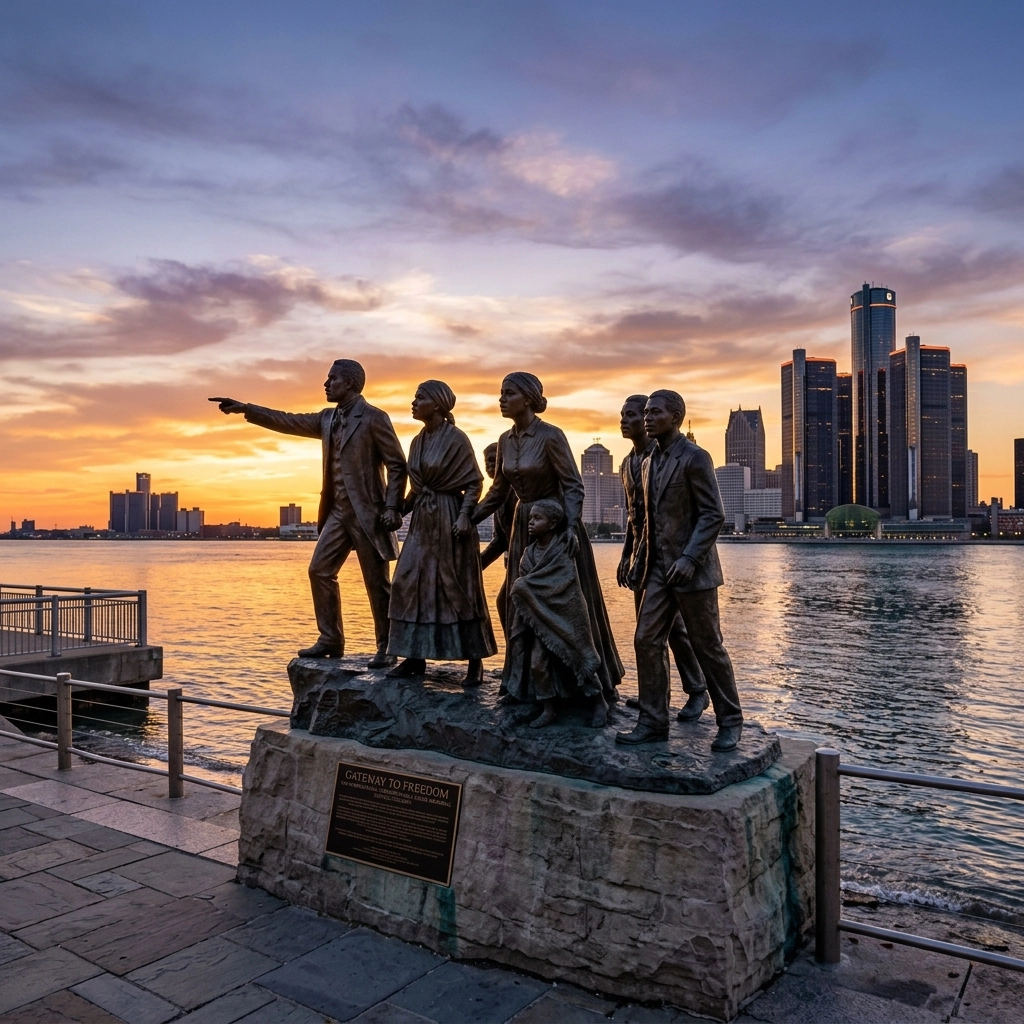
If you’ve spent even a single afternoon hanging out at Hart Plaza, you’ve definitely seen them. You know the ones, those bronze figures standing on the edge of the Detroit River, looking like they’re about to make a break for it. It’s the "Gateway to Freedom" memorial, and it’s one of the most powerful pieces of art in the city.
But here’s the thing that most people, even lifelong Detroiters, don’t actually realize: you’re only looking at half the story.
There is a "sequel" statue. A finish line. A sister installation that sits directly across the water in Windsor, Ontario. It’s called the "Tower of Freedom," and if you haven’t taken the tunnel or the bridge to go see it, you’re missing out on the most epic high-five in international art history.
At Make Detroit Home, we talk a lot about why people are moving to detroit. Sure, it’s the food, the detroit real estate deals, and the incredible Historic Homes in Detroit, but it’s also the soul of the place. This statue duo is the ultimate embodiment of that soul.
The Man Behind the Bronze: Ed Dwight
Before we dive into the statues themselves, we have to talk about the guy who made them: Ed Dwight. If you want to talk about a "badass" resume, Ed is the gold standard.
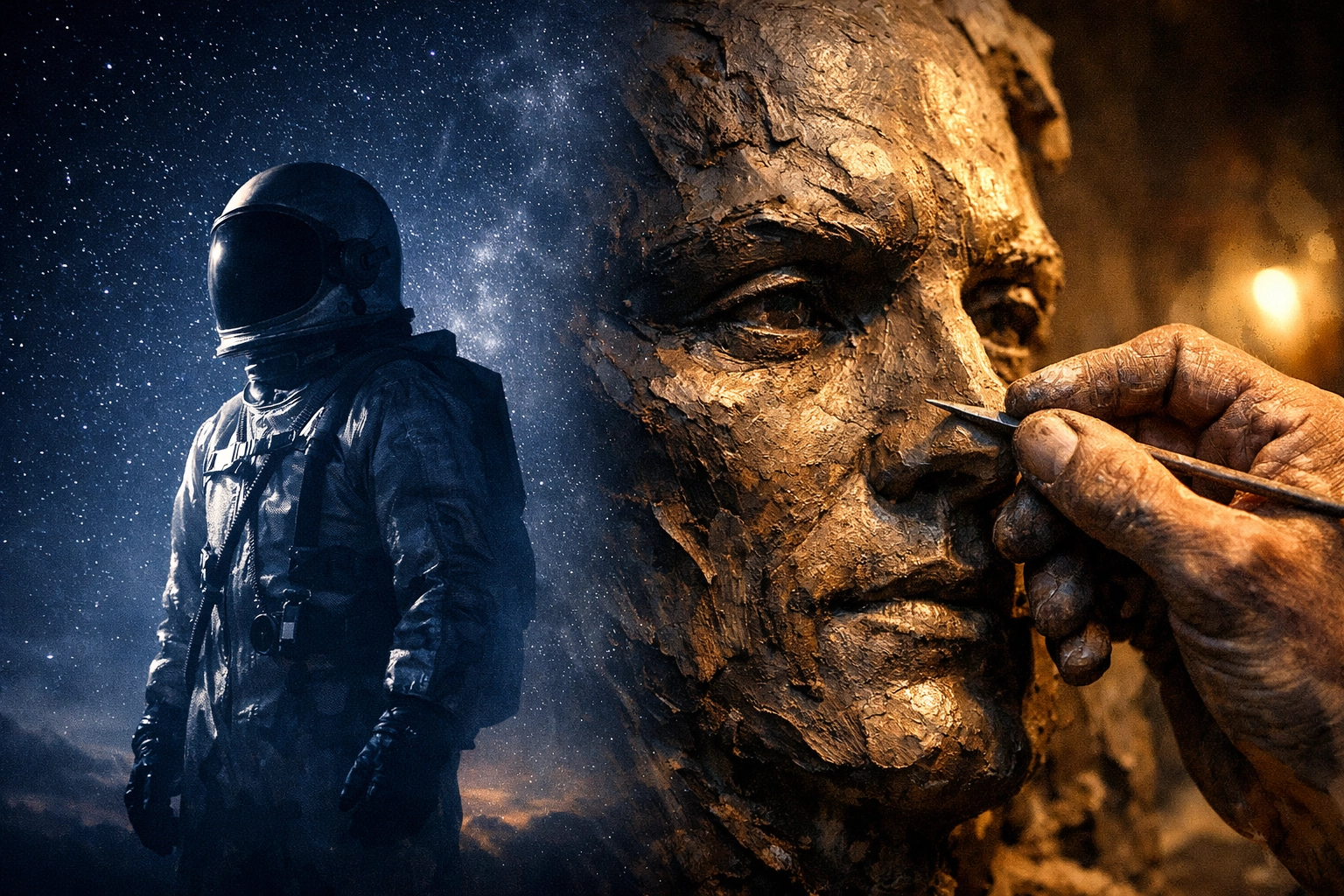
Not only is he a world-renowned sculptor, but back in the 1960s, he was also the first African American astronaut candidate. He was hand-picked by the Kennedy administration to train for space. When that didn’t pan out due to some old-school politics, he didn’t just sit around, he pivoted and became one of the greatest chroniclers of Black history through art.
When you look at these statues, you’re looking at the work of a man who literally trained to leave the planet. That sense of gravity, weight, and hope is baked into every inch of the bronze.
Part One: The Detroit Side (Gateway to Freedom)
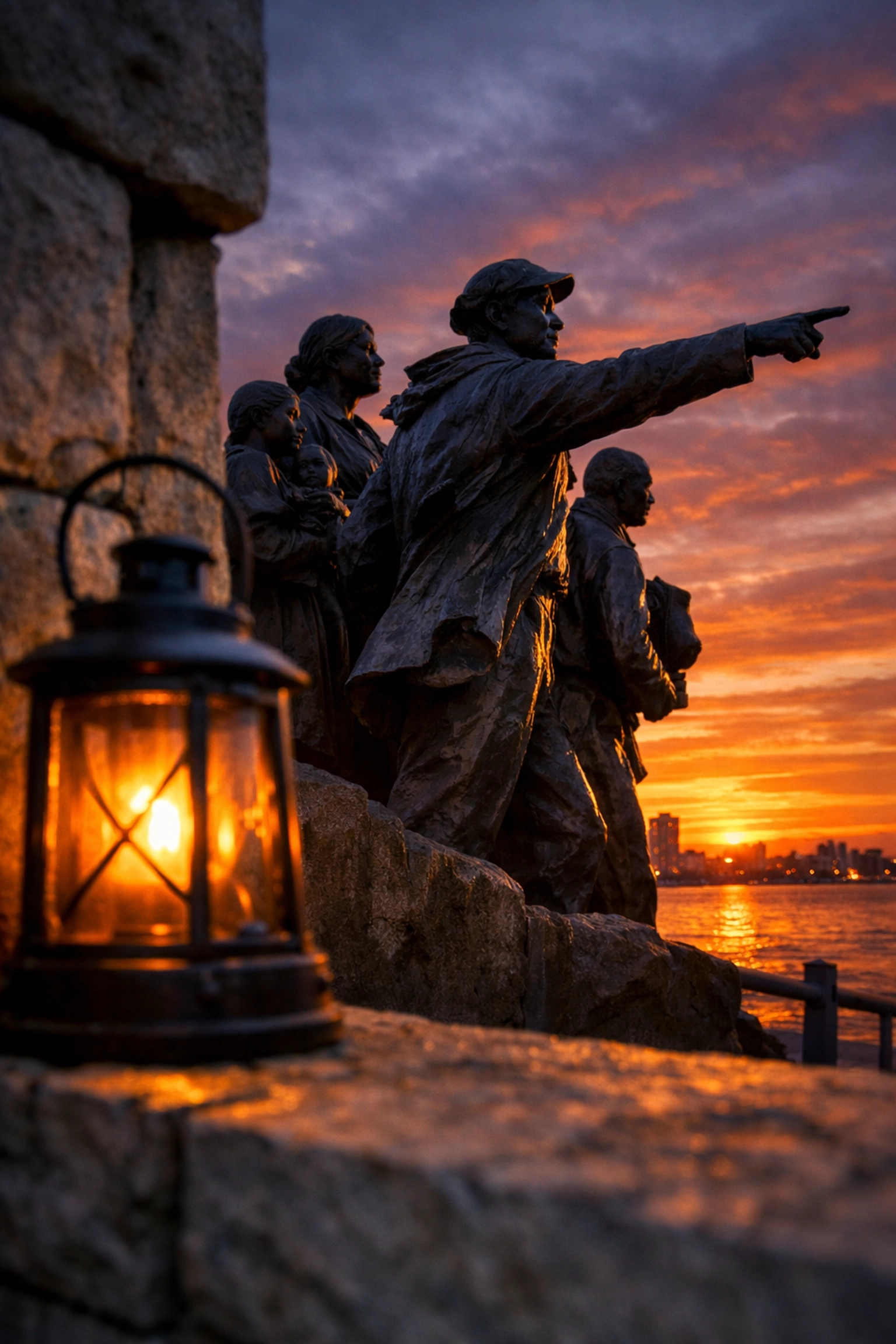
The Detroit half of the memorial was dedicated in October 2001, and it’s a masterclass in storytelling. It features eight life-sized figures of freedom seekers waiting for their moment to cross the river.
If you look closely, there’s a guy standing slightly apart from the group. That’s George DeBaptiste. He wasn’t just a random model; he was a real-life Detroit legend. DeBaptiste was a free Black man, a businessman, and a powerhouse in the Underground Railroad. In the sculpture, he’s pointing toward Canada.
It’s not just a "hey, look over there" kind of point. It’s a "that is where your life begins" kind of point.
The Detroit side also has these massive 15-foot pillars. They’re topped with candles, which are called the "Flames of Freedom." But my favorite "Easter egg" in the art is at the base. You’ll see engravings of lanterns resting in window sills. Back in the day, that was the secret signal. If you saw a lantern in a window, it meant that house was a safe harbor.
And if you really want to nerd out on the history, look at the pillars. The western pillar has a "slave tag" from 1833 Charleston, and the eastern pillar has a "free tag" from the 1780s. It’s a heavy, visual reminder of what these people were escaping and what they were moving toward.
The Secret Side: The Windsor Tower of Freedom
Now, this is where it gets cool. If you hop across the river to Windsor’s Civic Terrace, you’ll find the companion piece: the "Tower of Freedom."
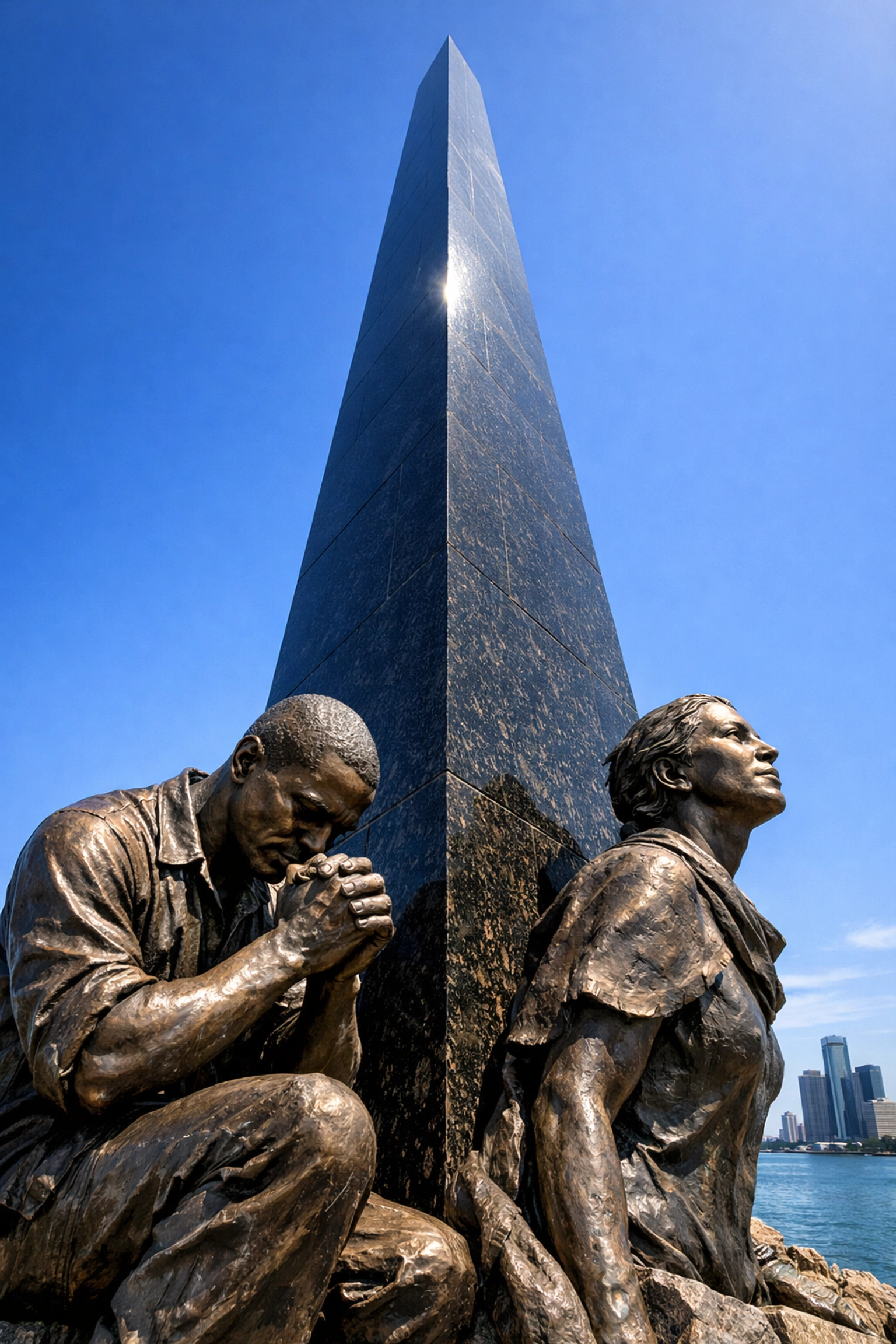
While the Detroit statue is full of tension, hiding, and anticipation, the Windsor side is pure emotion. It features four figures who have finally made it. They aren’t looking over their shoulders anymore. Instead, they are looking back at Detroit with expressions of relief, gratitude, and: finally: peace.
The centerpiece is a 22-foot granite monolith that towers over the figures. It feels like a landing pad, a solid foundation after a terrifying journey across the water. Most people don’t know about this side because, let’s be honest, we don’t always make the trek across the border just to look at art. But seeing the two together is a totally different experience. It turns the Detroit River from a scenic view into a literal threshold between two lives.
Why Detroit was Coded "Midnight"
Detroit wasn’t just a stop on the Underground Railroad; it was the stop. Because we are a border city, we were the final gateway for thousands of people.
The Underground Railroad was all about codes. You couldn't exactly text your location to a safe house. So, different cities had code names. Detroit’s code name was "Midnight."
Think about how cool that is for a second. Even in the 1800s, Detroit had that mysterious, late-night energy. By 1861, it’s estimated that about 30,000 freedom seekers had reached Ontario through this "Midnight" gateway.
When you’re looking for best neighborhoods in detroit or considering buying one of those beautiful Historic Homes in Detroit, you’re literally walking on the grounds where people were making the most important journey of their lives. That history is baked into the dirt here. It’s why the vibe of the city feels so grounded and resilient.
The Artistic "Cool Factor"
Aside from the history, this is just a world-class art installation. Having a single piece of art that spans an international border? That’s something you usually only see in places like Berlin or Paris. The fact that we have it right here in the Midwest is something we should be bragging about way more than we do.
The way Ed Dwight captured the movement of the clothes, the texture of the bronze, and the specific facial expressions of the seekers makes it feel less like a "statue" and more like a frozen moment in time. You can almost feel the cold wind coming off the river.
Why We Love This (And Why You Should Too)
At Make Detroit Home, we aren't just here to sell you a house. We’re here because we think this is the coolest city on the planet. When people ask us about moving to detroit, they usually ask about the taxes or the schools or the best place to get a coney dog. And we answer those things!
But we also tell them about the "Secret Statue."
We tell them about the fact that Detroit has always been a place where people come to find something better. Whether it was the Underground Railroad in the 1850s, the Great Migration in the 1920s, or the creative revival happening right now in 2026: Detroit is a city of seekers.
The detroit real estate market is booming because people want to be part of a place that has a narrative. You can buy a cookie-cutter house in a suburb anywhere in America, but you can only own a piece of "Midnight" right here.
How to See the Full Story
If you want to do the full "Freedom Tour," here’s the plan:
- Start at Hart Plaza: Walk down to the water and spend some time with the Detroit figures. Look for George DeBaptiste. Look for the lanterns in the window sills.
- Cross the River: Grab your passport and head through the tunnel.
- Visit Windsor: Head to the Civic Terrace. Stand by the Tower of Freedom and look back at the Detroit skyline.
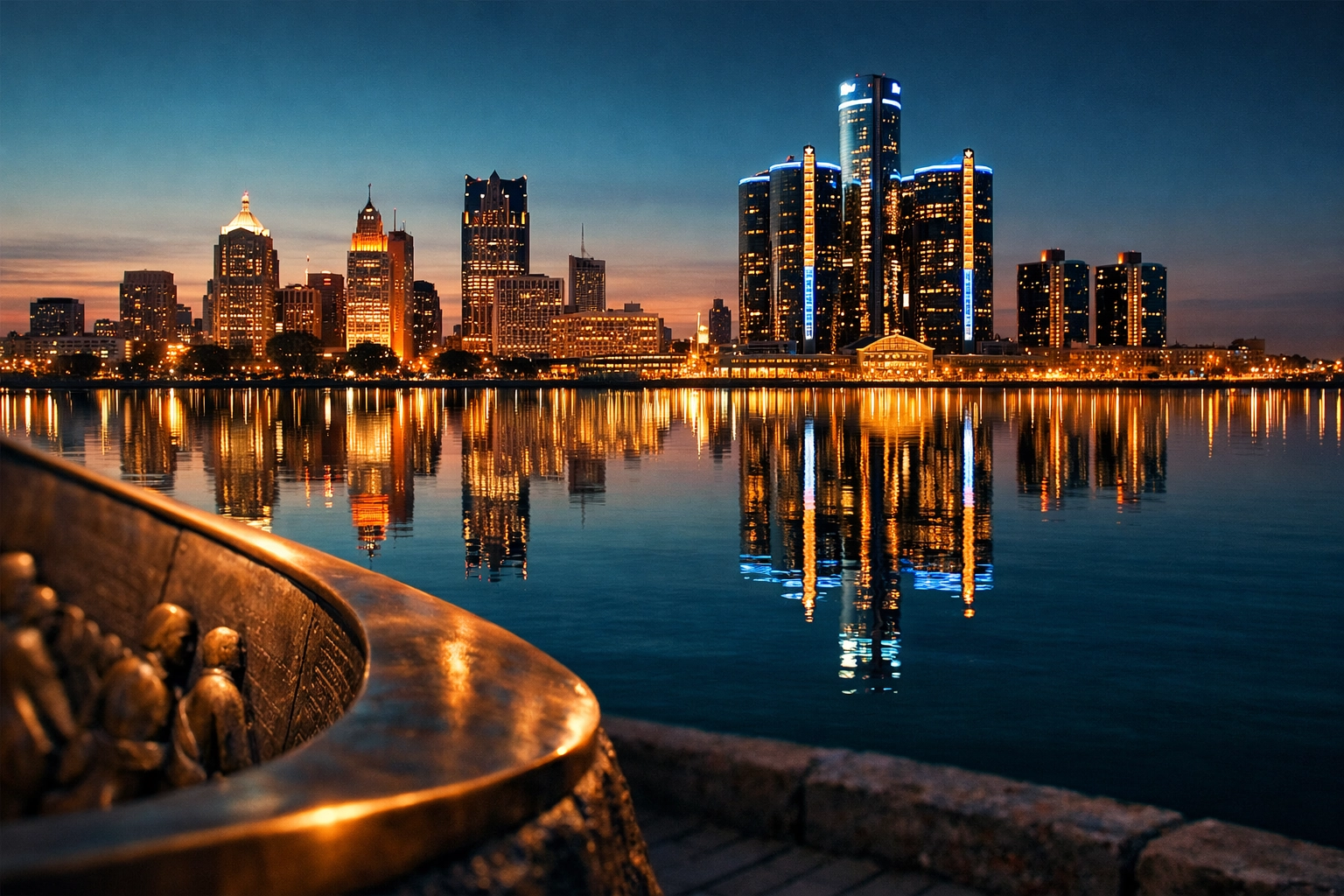
When you stand on the Canadian side and look back at the Renaissance Center, you realize that the river isn't just a barrier: it’s a bridge.
Detroit is a city built on grit, hope, and the courage to point toward a better future. So the next time you see that statue at Hart Plaza, remember that it’s not just a decoration. It’s half of a conversation that’s been going on for over 150 years.
And if you’re ready to start your own chapter in this city, give us a shout. We’d love to help you find your own "Gateway" to a new home.
Categories
- All Blogs (49)
- Community (19)
- Construction (4)
- Detroit (38)
- Don't do this! (3)
- Downpayment Assistance (7)
- Financing (8)
- First Time Home Buyer (17)
- Fun Fact (22)
- History (12)
- Home Maintenance (12)
- Idea's! (8)
- Money (3)
- Moving (11)
- Nerd (11)
- Pontiac (4)
- Real Estate (8)
- Renovations (4)
- Selling (3)
- Taxes (1)
- Title (1)
- Upgrades (4)
- You Should Know (15)
Recent Posts