The City Beneath the City: What Detroit’s Salt Mines Mean for Your Property
![[HERO] The City Beneath the City: What Detroit’s Salt Mines Mean for Your Property](https://cdn.marblism.com/CI-bcz4opb9.webp)
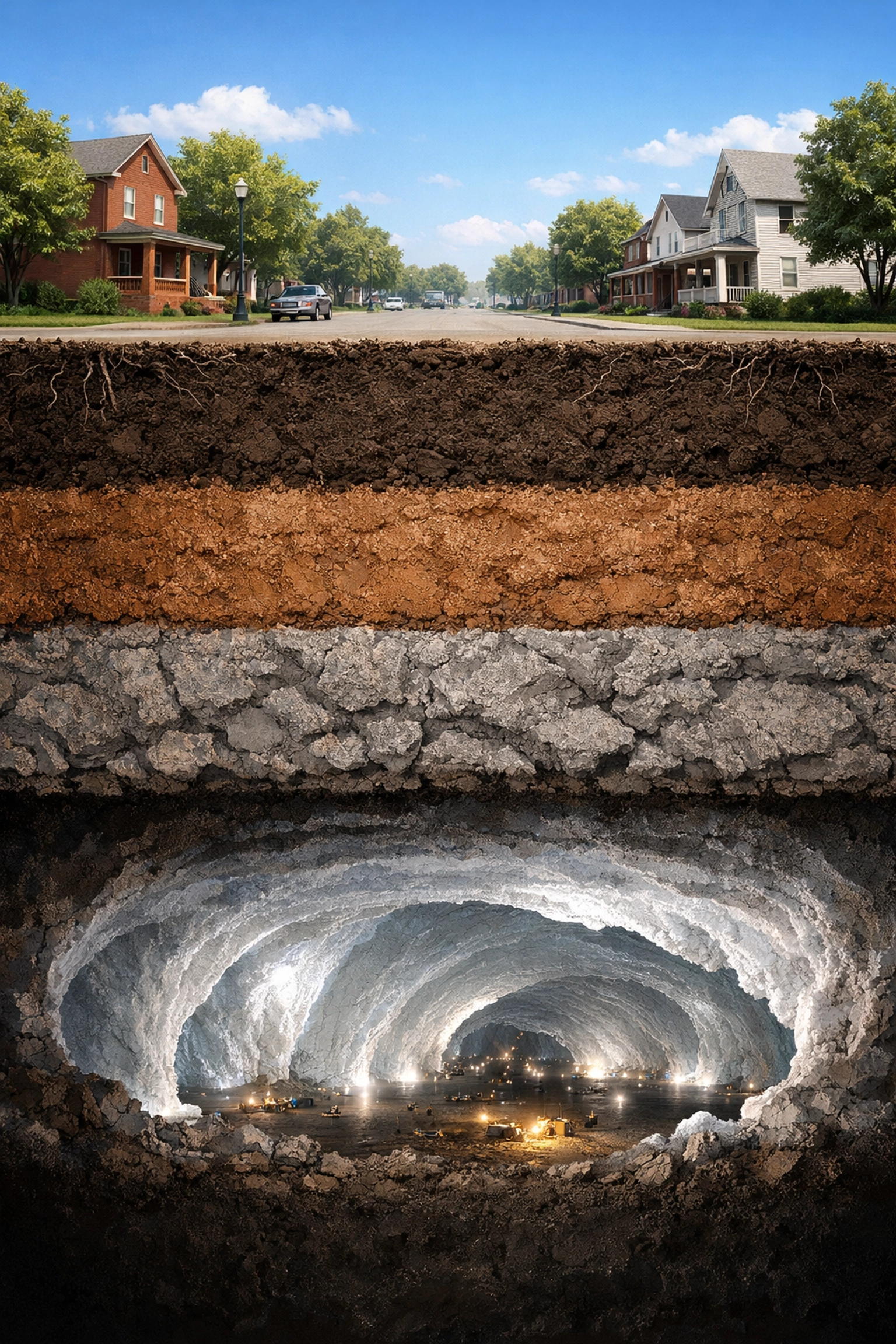
If you’ve lived in Detroit for more than five minutes, you know this city has layers. We’ve got the history, the music, the comeback stories, and the best Coney dogs in the world. But there’s a layer most people completely forget about: one that sits about 1,200 feet directly beneath our feet.
Welcome to the "City Beneath the City."
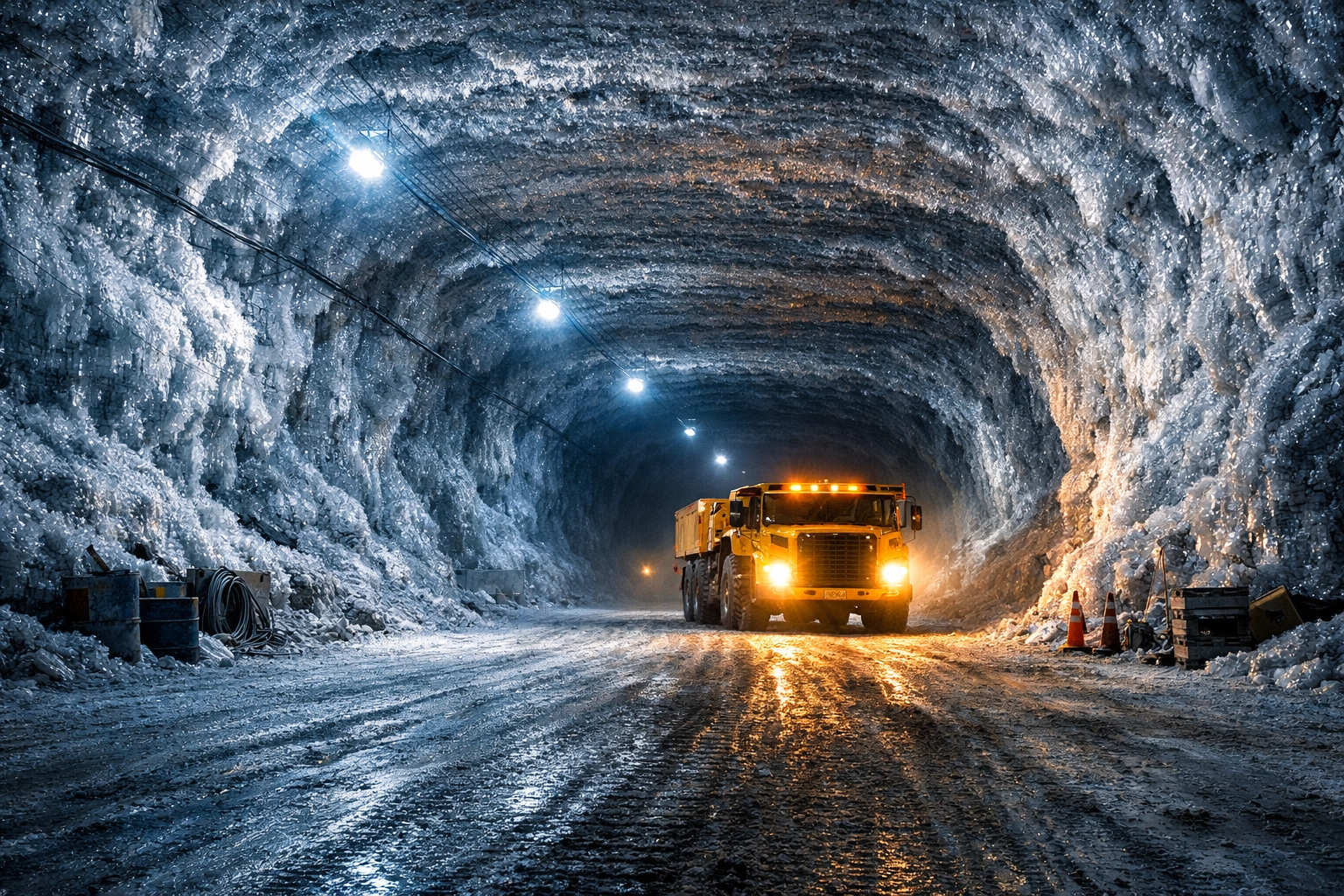
Detroit is sitting on top of one of the largest and most high-tech salt mines on the planet. We’re talking about a subterranean world with 100 miles of roads, massive trucks roaming around in the dark, and enough salt to keep every sidewalk in the Midwest clear of ice for the next few thousand years.
But as a homeowner or someone looking at detroit real estate, you might be wondering: Is my house sitting on a giant hole? Who owns the stuff under my garden? And is my living room going to end up 1,200 feet underground next Tuesday?
Let’s dig into the salty truth.
A Massive Operation (Literally)
First, a bit of scale. The Detroit Salt Company mine isn't just a little cave. It covers over 1,500 acres of subterranean space. To put that in perspective, that’s bigger than Belle Isle.
It starts about 1,100 to 1,200 feet down. For those who aren't great at mental math, that’s about the height of the Empire State Building buried underground. It’s deep. It’s also huge. There are over 100 miles of tunnels down there. They actually have a fleet of specialized vehicles: trucks, tractors, even golf carts: that were lowered down piece by piece and reassembled in the dark. They stay there forever. It’s a literal underworld of white crystals and heavy machinery.
Mineral Rights: Who Owns the "Below"?
In the world of detroit property investment, we usually talk about things we can see: roofs, windows, neighborhood comps, and curb appeal. But there’s a legal concept called "severed rights" that every savvy Detroiter should understand.
In the eyes of the law, a piece of land is like a layer cake.
- Surface Rights: This is what you bought. The grass, the house, the air above it.
- Mineral Rights: This is the stuff deep underground: oil, gas, and in our case, salt.
In many parts of the country (and especially in Detroit), these two layers can be owned by different people. This is what we call "severing" the rights. Long ago, a previous owner might have sold the rights to the salt beneath the property to a mining company while keeping the surface for themselves.
So, do you own the salt 1,200 feet under your bungalow? Probably not. But here’s the kicker: the mine actually tries very hard to avoid you.
The Legal Jigsaw Puzzle
You might imagine the mine as a giant, perfect circle expanding outward. In reality, it looks more like a weirdly shaped jigsaw puzzle or a Rorschach test.
Why? Because of lawyers.
To mine under a piece of land, the company needs the mineral rights. Securing those rights from thousands of individual homeowners in a dense residential neighborhood is a giant, expensive headache. If the salt mine wanted to go under a single city block, they’d have to track down every single property owner and sign a deal. The legal fees alone would cost more than the salt is worth.
Because of this "legal morphology," the mine generally sticks to larger tracts of land: think industrial sites, massive city-owned parcels, or areas where they could buy the rights in bulk decades ago. If you own a standard 40x100 lot in a residential neighborhood, the odds are the mine has steered clear of you simply because you’re too much paperwork.

Environmental Impacts: Is the Ground Stable?
Now, let’s talk about the "scary" stuff. Whenever you hollow out the earth, people naturally worry about the surface. The term you’ll hear tossed around is subsidence.
Subsidence is a fancy word for "the ground sinking." In salt mining, this happens because salt isn't like granite; it’s "plastic." Over very long periods, salt has a tendency to "creep" or flow back into the empty spaces that were mined out. If that happens too quickly or without proper support, the rock layers above can sag, leading to cracks in buildings or, in extreme cases, sinkholes.
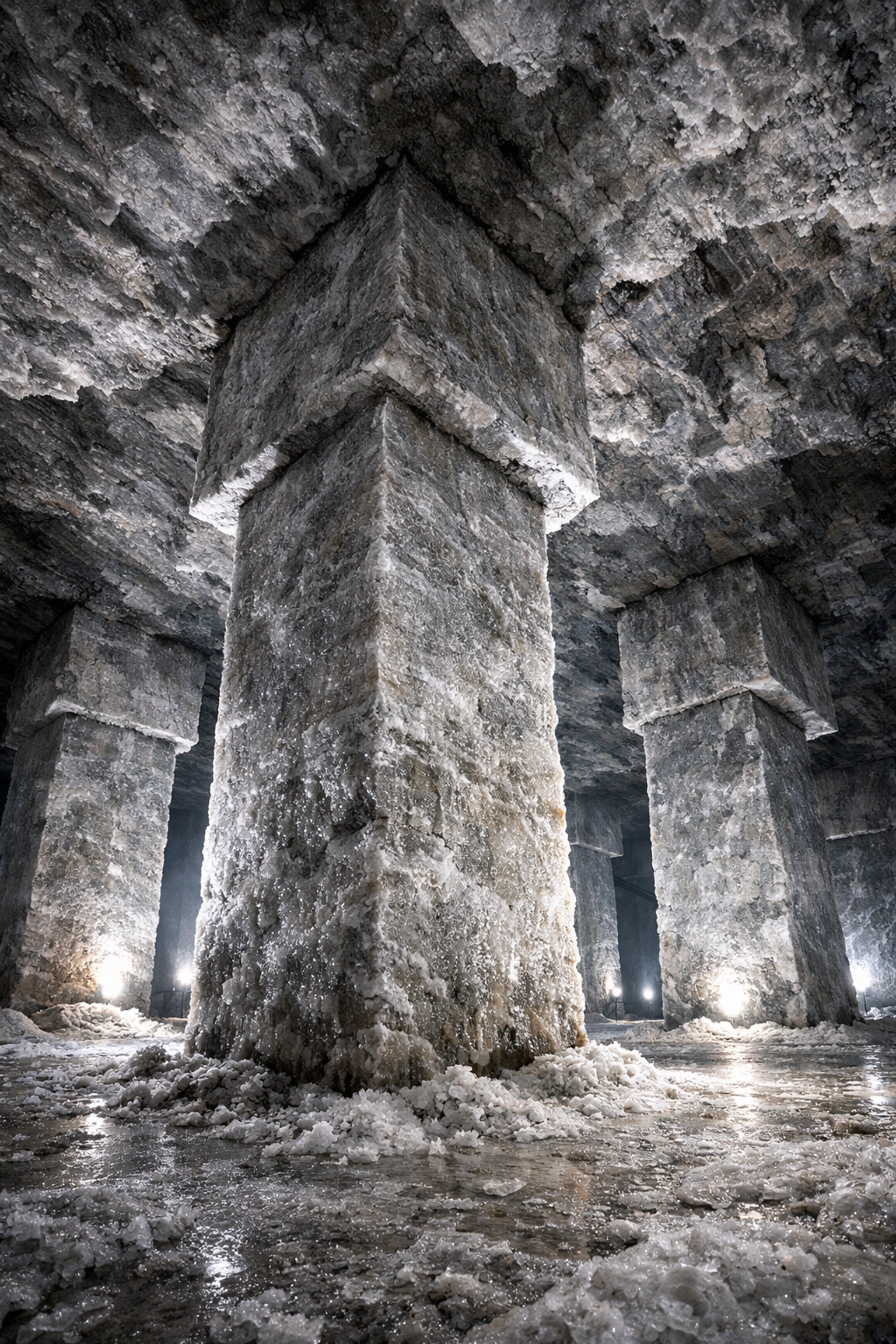
The Detroit mine uses a "room and pillar" method. Imagine a giant underground ballroom where they leave massive pillars of solid salt behind to hold up the ceiling. These pillars are calculated by engineers to keep everything rock solid.
Generally speaking, the Detroit mine is considered very stable. Unlike some mines in other parts of the country that suffered from groundwater leaks (which can dissolve the salt and cause rapid collapse), the Detroit mine is famously dry. Without water getting in, the risk of a "Retsof-style" collapse (a famous mine failure in New York) is extremely low.
Should You Be Worried About Your Property Value?
If you’re looking at detroit real estate, the salt mine is more of a cool "did you know?" fact than a reason to run for the hills.
For the vast majority of Detroiters:
- The depth is your friend: At 1,200 feet down, you don't feel the mining. You don't hear the blasts. You don't see the trucks.
- The location is specific: Unless you’re living right near the heavy industrial zones of Southwest Detroit or Melvindale, you’re likely not even on top of the active mining area.
- Insurance and Titles: If a property is affected by mineral rights or proximity to a mine, it will usually show up in a title search. Your title insurance and standard inspections are your best friends here.
The Real Estate Investor’s Take
For those into detroit property investment, the salt mine is a testament to the city’s industrial bones. It’s part of the reason Detroit became an industrial powerhouse: we had the salt for chemical processing and the river for transport.
While the environmental impact of modern mining is heavily regulated to prevent ground movement, it’s always smart to stay informed. If you’re buying a massive industrial warehouse in the 48217 or 48209 zip codes, doing a deep dive into the mineral rights and geological history of the parcel is a "must." For residential buyers? It’s mostly just a great story to tell at dinner parties.
Final Thoughts: The Salty Soul of Detroit
Detroit is a city of hidden depths: quite literally. Knowing that there are 100 miles of glowing white salt tunnels beneath us just adds to the mystery and character of the place we call home.
Is the salt mine an "environmental disaster" waiting to happen? Most experts say no. Is it a legal maze of mineral rights? Absolutely. But at the end of the day, it’s just another piece of the complex, gritty, and fascinating puzzle that is Detroit.
So, the next time you see a salt truck clearing the road in January, give a little nod to the ground beneath your feet. The "City Beneath the City" is hard at work, and your property: and your garden: are almost certainly just fine.
Want to find a home with a great view (of the surface, not the mine)? At Make Detroit Home, we help you navigate everything from property lines to local legends. Give us a shout!
Categories
- All Blogs (49)
- Community (19)
- Construction (4)
- Detroit (38)
- Don't do this! (3)
- Downpayment Assistance (7)
- Financing (8)
- First Time Home Buyer (17)
- Fun Fact (22)
- History (12)
- Home Maintenance (12)
- Idea's! (8)
- Money (3)
- Moving (11)
- Nerd (11)
- Pontiac (4)
- Real Estate (8)
- Renovations (4)
- Selling (3)
- Taxes (1)
- Title (1)
- Upgrades (4)
- You Should Know (15)
Recent Posts