7 Mistakes You're Making with Your Detroit Home Offer (and How to Fix Them)
![[HERO] 7 Mistakes You're Making with Your Detroit Home Offer (and How to Fix Them)](https://cdn.marblism.com/PHCgmgPZt9r.webp)
So, you’ve decided to buy a house in Detroit. First off, welcome to the club! You’re choosing a city with more soul, better architecture, and arguably the best coney dogs on the planet. But here’s the reality check: buying a home in the 313 isn't like buying a cookie-cutter ranch in the suburbs. The Detroit market is a beautiful, chaotic, block-by-block puzzle that can trip up even the most seasoned buyers.
At Make Detroit Home, we see it all the time. People come in with stars in their eyes and a suburban mindset, only to get their offers rejected, or worse, they get the house and realize they’ve made a massive financial oopsie.
If you want to win the house without losing your mind (or your life savings), you need to avoid these seven common mistakes. Let’s break them down and, more importantly, talk about how to fix them.
1. Ignoring the Infamous "Appraisal Gap"
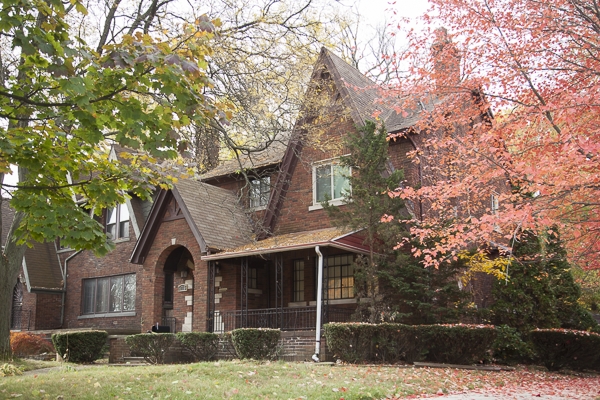
In a market as hot as Detroit is right now, houses are often selling for way over the asking price. You might find a gorgeous Tudor in University District listed for $400,000, fall in love, and offer $430,000 to beat out the other five offers.
The mistake? Forgetting that your bank only cares about what the appraiser says the house is worth. If the appraiser comes back and says, "Actually, this is only worth $410,000," you have a $20,000 "gap." In most standard contracts, if the house doesn't appraise, the deal can fall apart. In a competitive market, sellers want to know you have the cash to cover that gap.
How to Fix It:
Before you submit that offer, talk to your agent about an "Appraisal Gap Guarantee." This tells the seller, "Hey, if this house under-appraises, I’m willing to bring X amount of extra cash to the table." It makes your offer stand out because it removes the seller's fear that the deal will die at the eleventh hour. Just make sure you actually have that cash sitting in your bank account first.

2. Getting Blindsided by Property Tax "Uncapping"
This is the biggest "gotcha" in Michigan real estate. You see a listing on Zillow that says the current taxes are $1,200 a year. You think, "Wow, Detroit is so affordable!"
Hold your horses. Under Michigan’s Proposal A, property taxes are "capped" for the current owner. When the home is sold, the taxes "uncap" and reset based on the new sales price. If the previous owner lived there for 30 years, their tax bill is artificially low. Your new tax bill? It’s going to be based on about half of what you just paid for the house. That $1,200 bill could easily jump to $4,000 or $5,000 overnight.
How to Fix It:
Never, ever look at the "current taxes" on a listing. Instead, use a Michigan property tax estimator or ask your lender to run the numbers based on the new purchase price. Knowing your true monthly payment (mortgage + the new taxes) will keep you from being "house poor" the moment you move in.
3. Forgetting the "Detroit Inspection Reality"
We love our historic homes, but let’s be real: a 100-year-old house comes with 100-year-old problems. A mistake many buyers make, especially those moving from newer builds, is expecting a "clean" inspection report. In Detroit, there is no such thing as a clean inspection. There will be galvanized pipes, there will be knob-and-tube wiring, and there will definitely be some creative "DIY" repairs from 1974.
The biggest mistake? Not getting a sewer scope. Detroit’s infrastructure is old, and those beautiful silver maples in the front yard have roots that love to find their way into old clay sewer lines.
How to Fix It:
Adjust your expectations. Your goal isn't to find a perfect house; it's to find a structurally sound house. Focus on the "Big Five": the roof, the foundation, the electrical, the plumbing, and the HVAC. And for the love of everything holy, pay for the sewer scope. It costs about $150–$250, but it could save you a $15,000 bill for a main line replacement three months after you move in.

4. Missing the Neighborhood Nuance (The Block-by-Block Rule)
In many cities, you can judge a neighborhood by its name. In Detroit, things are more granular. You can be on a block that looks like a movie set, perfectly manicured lawns, historic streetlights, active block club, and just two streets over, it’s a completely different vibe.
A mistake buyers make is submitting an offer based on the neighborhood's reputation without actually walking the specific block. You need to know if the house next door is an active renovation or a long-term vacancy. You need to know if the street floods when it rains or if the neighbors throw a rager every Tuesday night.
How to Fix It:
Be a creep (in a nice way). Before you make an offer, visit the house at 8:00 PM on a weekday and noon on a Sunday. Walk the block. Talk to the neighbors. Detroiters are famously friendly and will usually give you the "real" tea on the street. If the block doesn't feel right, the house won't either.
5. Using a Lender Who Doesn't "Get" Detroit
This is a subtle one, but it kills deals. If you use a big national "dot-com" lender or a bank based in another state, they might struggle with Detroit’s unique quirks. They might not understand how to pull comps in a city where values vary wildly from street to street. They might get spooked by an older home’s appraisal or mess up the tax escrow (see point #2).
Sellers and their agents know this. If they see an offer with a pre-approval from a bank they’ve never heard of that doesn’t have a local office, they’re going to worry about the deal actually closing.
How to Fix It:
Work with a local lender who lives and breathes Detroit real estate. They know how to handle the "uncapping" of taxes, they understand the local appraisal nuances, and, most importantly, their name on your pre-approval letter gives the seller confidence. We have a list of favorites at Make Detroit Home if you need a recommendation!

6. The "Lowball" Myth
There’s a lingering myth that because Detroit had a rough patch a decade ago, you can still "get a steal" by offering 30% below asking. While there are certainly deals to be found, the days of buying a move-in-ready house in a desirable neighborhood for a bag of chips are over.
If you submit a lowball offer on a well-priced home in a neighborhood like Bagely, Grandmont Rosedale, or Corktown, you’re not "negotiating", you’re just insulting the seller. You’ll likely get a flat "no" without even a counter-offer, and you’ll miss out on a house you loved.
How to Fix It:
Trust the data, not the headlines from 2013. Have your agent run the "Solds" (comparable homes that have actually closed in the last six months). If the data shows the house is priced correctly, make a strong, fair offer. In Detroit's current market, being "reasonable" is often the boldest move you can make.
7. Falling for the "Flip" Without Checking the Bones
Detroit is full of beautifully renovated homes. New luxury vinyl plank flooring! White shaker cabinets! Trendy black hardware! It looks great on Instagram, but sometimes these "flips" are just lipstick on a pig.
The mistake is making a high-end offer based solely on the aesthetics. If a flipper spent $20,000 on cosmetic finishes but ignored a crumbling foundation or an ancient furnace, you’re buying a very pretty headache.
How to Fix It:
Look past the staging. Check the age of the water heater. Look at the electrical panel (is it updated to 100 or 200 amps?). Look for signs of water in the basement. If the "renovation" is all on the surface, adjust your offer price to account for the unaddressed mechanical issues. A smart offer considers what's behind the drywall, not just the paint color on top of it.

Final Thoughts: Don't Panic, Just Prepare
Making an offer in Detroit can feel like a high-stakes game of chess, but it doesn't have to be overwhelming. The "fix" for almost every mistake on this list comes down to one thing: information.
When you understand the taxes, respect the inspection process, and know the block-by-block dynamics, you can walk into a deal with total confidence. You won't just be "making an offer": you'll be making a smart investment in your future and in the future of this incredible city.
Ready to find your spot in the D? Give us a shout at Make Detroit Home. We live here, we work here, and we’d love to help you navigate the madness and find the house that’s perfect for you. Let's get you home!
Categories
- All Blogs (48)
- Community (18)
- Construction (4)
- Detroit (37)
- Don't do this! (3)
- Downpayment Assistance (7)
- Financing (8)
- First Time Home Buyer (17)
- Fun Fact (22)
- History (12)
- Home Maintenance (12)
- Idea's! (7)
- Money (3)
- Moving (11)
- Nerd (11)
- Pontiac (4)
- Real Estate (7)
- Renovations (3)
- Selling (3)
- Taxes (1)
- Title (1)
- Upgrades (3)
- You Should Know (14)
Recent Posts